
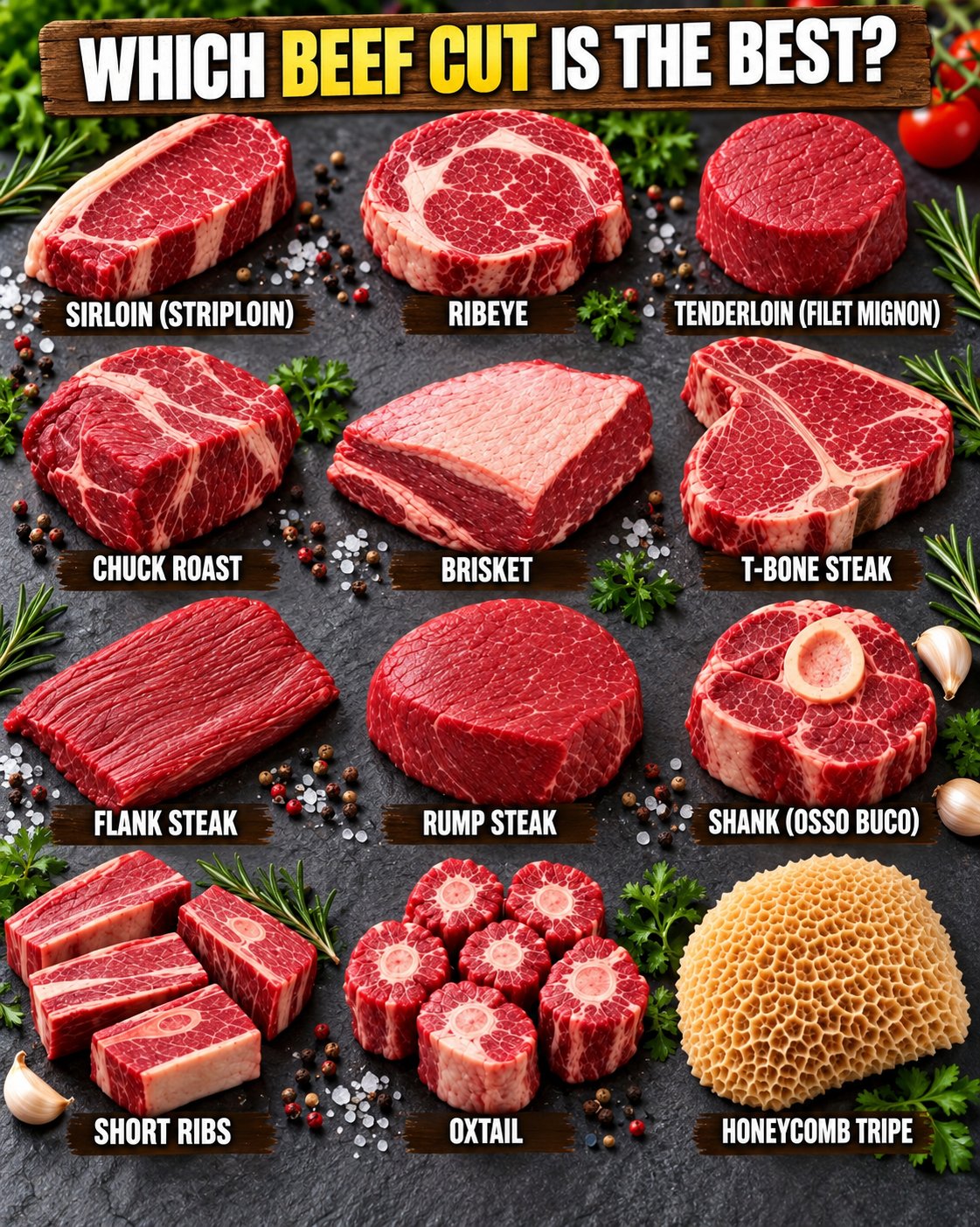
# The Ultimate Beef Cuts Guide 🥩🔥
When it comes to preparing delicious meals, understanding the various beef cuts is essential for any home cook or grill master. Different cuts offer distinct textures, flavors, and cooking methods, making it vital to know which cuts to select for your culinary creations. In this ultimate beef cuts guide, we will explore the most popular cuts of beef, including their characteristics, recommended cooking techniques, and tips for selecting and purchasing them.
## Understanding Beef Cuts
Beef is primarily divided into three main categories: primal cuts, subprimal cuts, and retail cuts. Primal cuts are the larger sections of the cow, while subprimal cuts are derived from these primal cuts. Retail cuts are what you find at your local butcher shop or grocery store.
### Primal Cuts
There are eight main primal cuts of beef:
1. **Chuck**: Located at the shoulder, chuck cuts are flavorful and contain a good amount of connective tissue. Ideal for slow cooking, braising, or stewing, common cuts include chuck roast, shoulder steak, and ground beef.
2. **Rib**: The rib area produces some of the most tender and flavorful cuts. Ribeye steak, prime rib, and back ribs are all popular choices for grilling and roasting.
3. **Loin**: This section is divided into the short loin and the sirloin. The short loin produces premium cuts like T-bone and porterhouse steaks, while the sirloin offers steaks that are leaner yet flavorful.
4. **Round**: Found in the rear of the cow, round cuts are generally leaner and less tender. Common cuts include round steak and eye of round, which are best suited for roasting or slow cooking.
5. **Brisket**: Known for its rich flavor and tough texture, brisket is ideal for low-and-slow cooking methods like smoking and braising. It is a favorite for barbecue enthusiasts.
6. **Plate**: This area below the rib is home to flavorful yet fatty cuts, such as skirt steak and hanger steak, which are excellent for grilling and stir-frying.
7. **Flank**: The flank cut is lean and flavorful, often used for dishes like fajitas. Flank steak should be cooked quickly at high temperatures and sliced against the grain.
8. **Shank**: This cut is tough and full of connective tissue, making it suitable for braising or slow cooking. Osso buco, or braised shank, is a well-known dish using this cut.
## Popular Beef Cuts and Their Uses
### Ribeye Steak
One of the most sought-after cuts, ribeye steak is revered for its rich marbling and tenderness. It offers a robust flavor, making it perfect for grilling or pan-searing. Ribeye steaks can be bone-in or boneless, and they are an excellent choice for steak lovers.
### Tenderloin
Often regarded as the most tender cut of beef, tenderloin is ideal for special occasions. This cut is typically served as filet mignon or as part of a beef Wellington. Because of its tenderness, it requires minimal cooking time and pairs well with sauces and fine accompaniments.
### Sirloin
Sirloin steaks are flavorful cuts that are generally more affordable than tenderloin or ribeye. They include several subtypes, such as top sirloin and bottom sirloin, making them versatile choices for grilling, pan-searing, or roasting.
### Brisket
A traditional cut for barbecue, brisket is a favorite at smokehouses and family gatherings. Its flavor deepens as it cooks, and it’s best prepared using low-and-slow techniques to break down the tough connective tissues.
### Ground Beef
One of the most versatile ingredients, ground beef can be used in a plethora of dishes, from burgers to meatballs and beyond. It is usually made from various cuts, including chuck and round. Look for blends with higher fat content for juicier results.
## Cooking Techniques for Beef Cuts
Different cooking methods yield the best results depending on the cut of beef. Here’s how to prepare some of the most popular cuts effectively:
### Grilling
For cuts like ribeye, sirloin, and flank steak, grilling remains the preferred cooking method. Preheat your grill to high, season the meat with salt and pepper, and cook until reaching the desired doneness. Let the meat rest before slicing to allow juices to redistribute.
### Braising
Cuts such as chuck, brisket, and shank benefit from braising. This method involves cooking the meat slowly in liquid over low heat, resulting in tender and flavorful dishes. Consider using beef broth, red wine, or a savory marinade for added depth.
### Sous Vide
This precision cooking method is ideal for tender cuts like tenderloin or ribeye. Vacuum-seal the meat and cook it in a water bath at a controlled temperature before searing it on high heat for a perfect crust.
### Roasting
Roasting is suitable for larger cuts, especially during celebrations. Brisket and prime rib are commonly roasted to create an impressive centerpiece. Ensure you season well and use a meat thermometer to achieve perfect doneness.
## Selecting and Storing Beef Cuts
When selecting beef, look for cuts that have a bright red color with good marbling. The marbling of fat is directly linked to flavor and tenderness. Additionally, check for USDA grading, with Prime being the highest quality, followed by Choice and Select.
### Storing Beef
To preserve freshness, store beef cuts in the refrigerator at temperatures below 40°F. For longer storage, consider freezing the beef in airtight packaging. Most cuts can last up to six months in the freezer while maintaining their quality.
## Conclusion
Understanding beef cuts is essential for anyone looking to enhance their cooking skills. By familiarizing yourself with the various cuts, their uses, and the best cooking methods, you can create delicious, flavorful meals that impress even the most discerning diners. From the rich marbling of ribeye to the tenderness of filet mignon, the world of beef cuts offers a vast array of options. So next time you are at the butcher, remember this ultimate beef cuts guide to help you make informed choices and elevate your dining experience!